

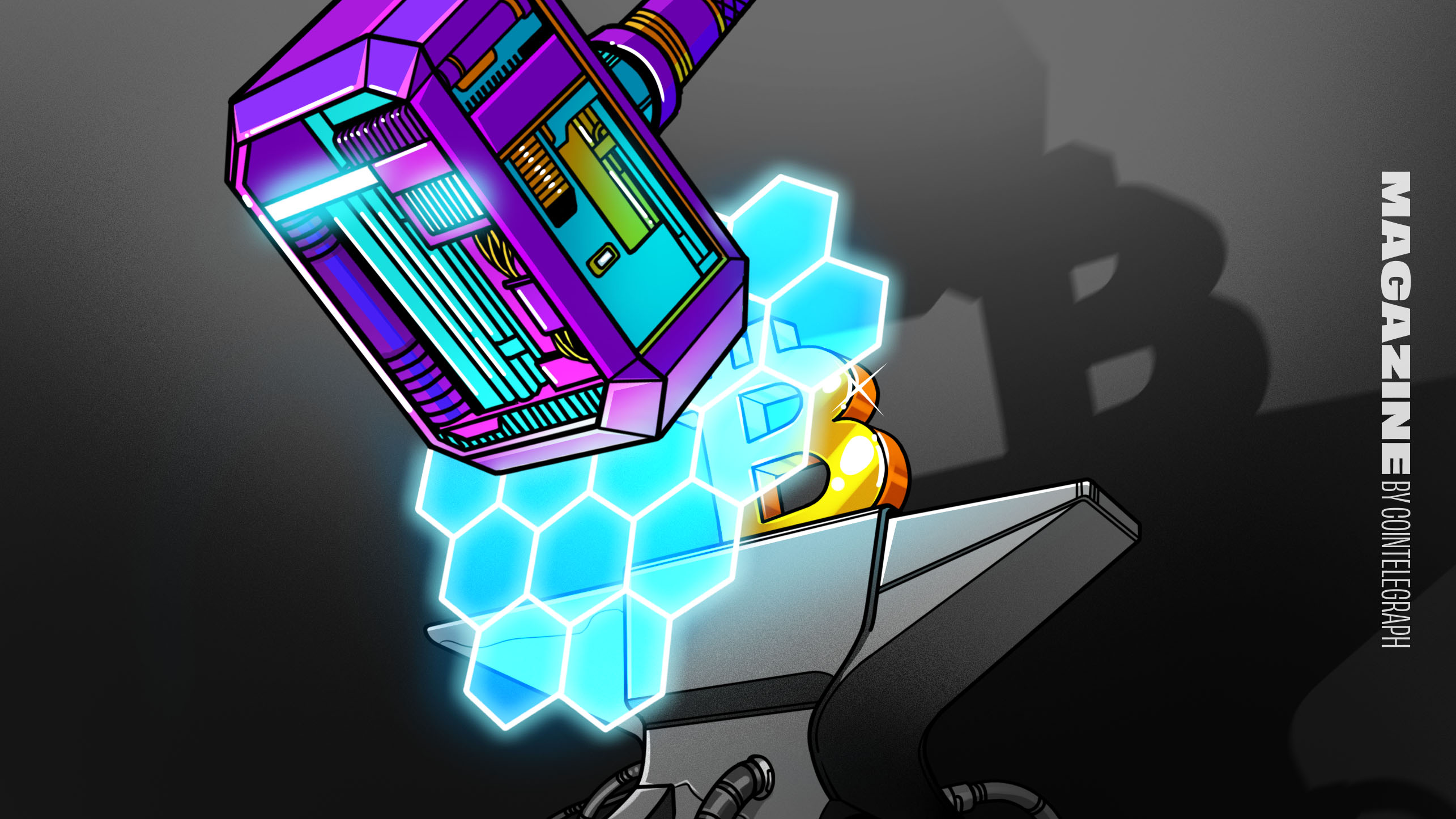
Bitcoin's Quantum Conundrum: A Race Against the Future for Digital Gold's Integrity
The digital frontier of finance, anchored by Bitcoin, faces an existential reckoning as the specter of quantum computing looms large. As reported by Cointelegraph on July 9, 2026, the cryptocurrency community is grappling with a profound dilemma: whether to pursue immediate scaling through larger block sizes or to fortify its cryptographic foundations with advanced solutions like STARK proofs. This choice is not merely technical; it represents a fundamental philosophical debate about Bitcoin's future architecture, its core tenets of decentralization and security, and its long-term viability as a global store of value in an era of unprecedented computational power.
The Quantum Shadow Over Bitcoin's Horizon
For over a decade, Bitcoin has stood as a testament to cryptographic ingenuity, its security underpinned by algorithms like SHA-256 for hashing and Elliptic Curve Digital Signature Algorithm (ECDSA) for transaction signing. These mathematical fortresses have, until now, been considered impregnable by conventional computing standards. However, the rapid advancements in quantum computing present a formidable, albeit still nascent, threat. A sufficiently powerful quantum computer, theoretically, could render current cryptographic standards obsolete, potentially compromising the integrity of Bitcoin's ledger and the security of its users' funds. The question is no longer if this threat will materialize, but when, pushing the Bitcoin community to proactively seek quantum-resistant solutions.
The Fork in the Road: Scaling vs. Cryptographic Reinforcement
As Cointelegraph highlighted, the debate within the Bitcoin ecosystem has crystallized around two distinct pathways to address future challenges, including the quantum threat: a pragmatic approach centered on increasing block sizes, or a more radical overhaul involving sophisticated cryptographic proofs. This isn't merely a technical discussion; it's a strategic decision that will define Bitcoin's resilience and character for decades to come.
The Allure and Peril of Bigger Blocks
The concept of increasing Bitcoin's block size limit, a recurring theme in its history, offers an ostensibly straightforward solution to scalability. Larger blocks could accommodate more transactions per block, theoretically increasing throughput and reducing transaction fees. Proponents argue this offers a more immediate and less complex path to scaling, addressing network congestion. However, this approach carries significant risks. Larger blocks demand greater computational resources, storage, and bandwidth from network nodes. This increased barrier to entry could lead to fewer full nodes, concentrating power among a smaller number of well-resourced entities, thereby undermining Bitcoin's fundamental principle of decentralization. Furthermore, simply increasing block size does not inherently address the quantum threat to the underlying cryptographic primitives.
STARK Proofs: A Cryptographic Shield for the Future
On the other hand, the integration of STARK (Scalable Transparent Arguments of Knowledge) proofs represents a more profound architectural shift. STARKs are a type of zero-knowledge proof that allows for the verification of computations without revealing the underlying data, offering immense potential for both scalability and privacy. By enabling off-chain computation with on-chain verification, STARKs could drastically increase transaction throughput without burdening the main chain, thus preserving decentralization. Crucially, STARKs are also considered more robust against certain quantum attacks, offering a potential cryptographic shield for Bitcoin's future. The challenge lies in their complexity; implementing STARKs would require significant protocol changes, extensive research, and rigorous auditing to ensure their security and compatibility with Bitcoin's existing infrastructure.
The Philosophical Divide: Pragmatism vs. Purity
This dilemma echoes past ideological battles within the Bitcoin community, such as the block size wars that led to the creation of Bitcoin Cash. It pits the pragmatists, who advocate for simpler, more immediate scaling solutions, against those who prioritize cryptographic purity, decentralization, and long-term security, even if it means more complex and disruptive changes. The choice between bigger blocks and STARKs is a choice between two different visions for Bitcoin's future: one that prioritizes ease of use and immediate capacity, and another that champions uncompromised security and decentralization, even in the face of quantum threats. The outcome will undoubtedly shape Bitcoin's identity and its role in the global financial landscape.
Navigating the Quantum Labyrinth: Bitcoin's Enduring Challenge
The path forward for Bitcoin is fraught with technical complexities and philosophical debates. The decision regarding its future architecture, particularly in light of the quantum computing threat, will be one of the most critical in its history. It demands foresight, rigorous analysis, and a consensus-driven approach to ensure Bitcoin's continued resilience and relevance. When it comes to understanding the big market picture and forming investment strategies, FireMarkets' Market Insight provides broad perspectives from macroeconomic analysis to individual asset trends, offering invaluable resources for navigating such complex and evolving financial landscapes.
FireMarkets Intelligent Outlook
Real-time technical analysis and AI sentiment for BTC.
View AI Analysis Summary
Crypto Fear & Greed
Next Update: Unknown
Firemarkets.net AI Analysis Result:
* Not financial advice. Data for informational purposes only.
Want deeper analysis on this asset?
Check out expert reports and on-chain data provided by FireMarkets specialists.
All content provided by FireMarkets (including news, analysis, and data) is for reference purposes only to assist in investment decisions and does not constitute a recommendation to buy or sell any specific asset.
Financial markets are highly volatile, and past performance is not indicative of future results. Please rely on your own judgment and consult with professionals before making any investment decisions. FireMarkets assumes no legal liability for investment outcomes.