

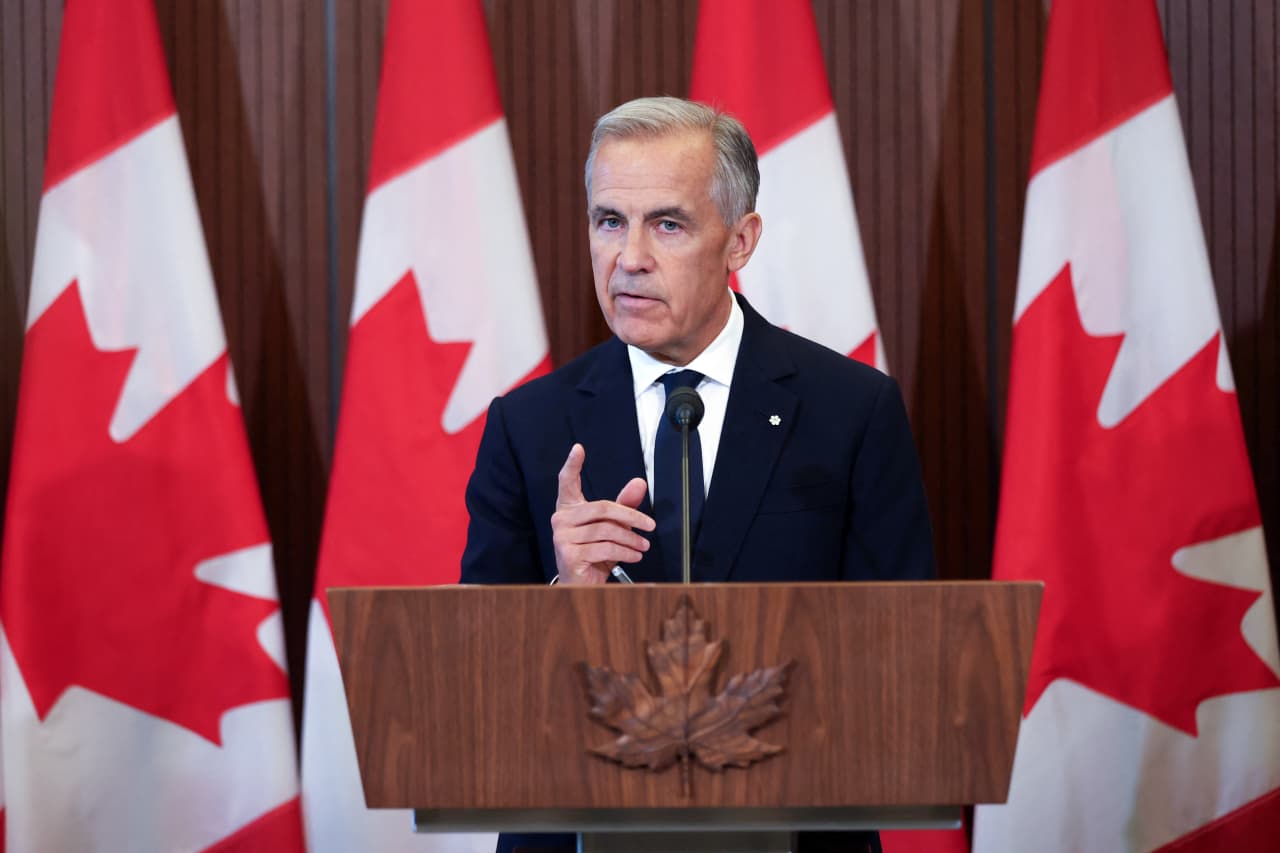
Northern Fury: Canada's Retaliatory Tariffs Escalate U.S. Trade Tensions
Canada's recent announcement of retaliatory tariffs on U.S. goods, following the collapse of crucial trade negotiations, marks a significant escalation in cross-border economic friction. This move, reported by MarketWatch on August 22, 2026, signals a deepening rift between two of the world's closest trading partners, threatening to disrupt established supply chains and introduce fresh volatility into North American markets. The breakdown in talks and subsequent punitive measures underscore a growing protectionist sentiment that could have far-reaching implications beyond immediate bilateral trade.
The Unraveling of Bilateral Harmony
The delicate equilibrium of North American trade has been profoundly shaken by Canada's recent announcement of retaliatory tariffs against a range of U.S. goods. This decisive move, coming on the heels of collapsed bilateral trade negotiations, signals a significant and concerning escalation in economic tensions between two of the world's most intertwined economies. As reported by MarketWatch on August 22, 2026, the breakdown in talks has paved the way for punitive measures, casting a long shadow over a relationship historically defined by cooperation and mutual benefit.
A History of Interdependence Under Strain
For decades, Canada and the United States have maintained one of the world's most robust and integrated trade relationships, characterized by vast cross-border supply chains and a shared economic destiny. However, underlying frictions, often stemming from specific industry protections or perceived unfair trade practices, have periodically surfaced. The current impasse, culminating in Canada's retaliatory tariffs, suggests these historical strains have reached a critical point, moving beyond diplomatic rhetoric to concrete economic action. The specific goods targeted by Canada's tariffs, though yet to be fully detailed, are expected to strategically impact key U.S. sectors, aiming to exert maximum pressure for a return to the negotiating table on more favorable terms for Ottawa.
Economic Repercussions: A Ripple Effect
The imposition of tariffs, by its very nature, is a double-edged sword, designed to inflict pain on the target while often incurring collateral damage domestically. The immediate economic fallout from Canada's actions is likely to be multifaceted, affecting producers, consumers, and the broader market sentiment.
Targeted Industries and Supply Chain Vulnerabilities
Industries heavily reliant on cross-border trade, particularly those with intricate supply chains spanning the U.S. and Canada, will undoubtedly bear the brunt of these new tariffs. Sectors such as agriculture, automotive components, and manufacturing could face increased input costs, reduced competitiveness, and potential disruptions to their operational efficiencies. Companies that have optimized their production processes across the border will now confront the unenviable task of re-evaluating sourcing strategies, potentially leading to higher costs or even relocation of facilities. This fragmentation of established supply routes could have a chilling effect on future investment in both nations.
Inflationary Pressures and Consumer Impact
For consumers in both countries, the tariffs could translate into higher prices for imported goods. Canadian consumers might see an increase in the cost of U.S. products, while American consumers could face higher prices for goods that rely on Canadian inputs. This inflationary pressure, particularly in an environment already grappling with post-pandemic economic adjustments, could dampen consumer spending and contribute to broader economic slowdowns. The political calculus behind such moves often overlooks the direct impact on household budgets, risking public discontent.
Beyond the Border: Geopolitical Undercurrents
The Canada-U.S. trade dispute is not merely a bilateral squabble; it reflects a broader global trend towards protectionism and economic nationalism. This escalation could have significant implications for international trade norms and multilateral institutions.
The Erosion of Multilateralism
The breakdown of trade talks and the subsequent unilateral imposition of tariffs by Canada underscore a growing skepticism towards established multilateral trade frameworks. When close allies resort to such measures, it sends a powerful signal that national interests are increasingly prioritized over collective economic stability. This trend, if continued, could further weaken institutions like the World Trade Organization (WTO), making it harder to resolve future disputes through diplomatic channels and potentially encouraging other nations to adopt similar protectionist stances.
Precedent for Future Disputes
Canada's firm stance could set a precedent for how smaller economies respond to perceived trade injustices from larger partners. While asserting sovereignty, it also risks a tit-for-tat dynamic that can quickly spiral into a full-blown trade war, with no clear winners. The economic costs of such conflicts are substantial, often leading to reduced global trade volumes, slower economic growth, and increased market uncertainty.
Navigating the Volatility: Investor Considerations
In this environment of heightened trade tensions, investors face a complex landscape. The immediate reaction in equity markets might be negative, particularly for companies with significant exposure to cross-border trade between the U.S. and Canada.
Sectoral Exposure and Hedging Strategies
Investors should meticulously review their portfolios for exposure to sectors most vulnerable to these tariffs, such as automotive, agriculture, and certain manufacturing industries. Diversification across geographies and asset classes becomes even more critical. Companies with robust supply chain resilience and diversified market access may fare better. Furthermore, currency fluctuations, particularly between the Canadian dollar and the U.S. dollar, will warrant close monitoring, as they can amplify or mitigate the impact of tariffs on corporate earnings.
Conclusion: An Uncertain Path Forward
The imposition of retaliatory tariffs by Canada marks a concerning chapter in North American trade relations. While the full extent of the economic fallout remains to be seen, the immediate future points towards increased market volatility and a period of uncertainty for businesses and consumers alike. The hope remains that diplomatic channels can eventually reopen, leading to a resolution that restores stability to this vital economic partnership. To establish a clear investment direction amid complex market conditions, we recommend comprehensively leveraging FireMarkets' in-depth analysis content and fundamental on-chain data.
Want deeper analysis on this asset?
Check out expert reports and on-chain data provided by FireMarkets specialists.
All content provided by FireMarkets (including news, analysis, and data) is for reference purposes only to assist in investment decisions and does not constitute a recommendation to buy or sell any specific asset.
Financial markets are highly volatile, and past performance is not indicative of future results. Please rely on your own judgment and consult with professionals before making any investment decisions. FireMarkets assumes no legal liability for investment outcomes.