

Nvidia's Ascent: Charting the Course to a $10 Trillion Horizon by 2030
In the ever-accelerating race for technological supremacy, few companies command as much attention as Nvidia. A recent projection, notably highlighted by The Motley Fool in mid-2026, posits an audacious future: could Nvidia realistically achieve a staggering $10 trillion market capitalization by 2030? This inquiry transcends mere financial speculation, delving into the very fabric of innovation, market dynamics, and the relentless pursuit of next-generation computing that defines our era. Our analysis will dissect the drivers, challenges, and transformative potential underpinning such an extraordinary valuation.
The AI Revolution's Vanguard
Nvidia’s journey from a graphics card pioneer to the undisputed leader in accelerated computing is a testament to its strategic foresight. At the heart of its meteoric rise is the artificial intelligence revolution. The demand for high-performance computing, particularly for training and inference in large language models and complex AI applications, has propelled Nvidia’s data center segment into an unprecedented growth trajectory. Its GPUs, such as the Hopper and Blackwell architectures, have become the de facto standard for AI workloads, creating a formidable moat against competitors. This dominance is not merely about raw processing power; it’s about an integrated hardware-software ecosystem that has become indispensable to the global AI infrastructure.
Unrivaled Data Center Dominance
The insatiable appetite for AI compute power from hyperscalers, enterprises, and research institutions forms the bedrock of Nvidia's growth. Each new generation of AI models demands exponentially more computational resources, a trend Nvidia is uniquely positioned to capitalize on. The company's ability to consistently deliver cutting-edge chips that offer superior performance per watt and cost efficiency ensures its continued leadership in this critical sector.
Beyond Hardware: The Software and Ecosystem Play
While Nvidia's hardware prowess is undeniable, its true strategic genius lies in its comprehensive software platform. CUDA, its parallel computing platform, has fostered a vast developer ecosystem, making it incredibly difficult for customers to switch to alternative architectures without incurring significant retooling costs and performance compromises. This lock-in effect is a powerful competitive advantage, ensuring recurring revenue streams and reinforcing its market position.
The Omniverse and Industrial Digitalization
Beyond AI training, Nvidia is aggressively expanding into new frontiers. The Omniverse platform, designed for building and operating metaverse applications and digital twins, represents a significant long-term growth vector. As industries from manufacturing to automotive embrace digitalization and simulation, Omniverse could unlock vast new markets, transforming how products are designed, factories are run, and complex systems are managed. This strategic pivot towards enterprise software and simulation further diversifies Nvidia's revenue streams and embeds its technology deeper into the global economy.
Navigating the Competitive Landscape and Macro Headwinds
Achieving a $10 trillion valuation is not without its formidable challenges. The semiconductor industry is notoriously cyclical and intensely competitive. Rivals like AMD are making strides in AI accelerators, while tech giants are increasingly designing their own custom AI chips, potentially eroding Nvidia's market share in the long run. Geopolitical tensions, particularly concerning semiconductor supply chains and export controls, also pose significant risks.
Regulatory Scrutiny and Market Saturation
Furthermore, Nvidia's dominant market position could attract increased regulatory scrutiny, potentially leading to antitrust investigations or restrictions on its business practices. The sheer scale required to reach $10 trillion implies a sustained period of hyper-growth that might eventually face the natural limits of market saturation or technological shifts. Economic downturns or a slowdown in global AI investment could also temper its growth trajectory.
The Path to $10 Trillion: Growth Multipliers and Market Expansion
For Nvidia to reach a $10 trillion valuation by 2030, it would require not just continued dominance in its existing markets but also significant expansion into new, high-growth sectors. This implies a sustained annual growth rate far exceeding historical norms for even the most successful technology companies. It would necessitate Nvidia capturing an ever-larger share of the total addressable market (TAM) across AI, data centers, automotive, robotics, and the metaverse.
Unlocking New Trillion-Dollar Markets
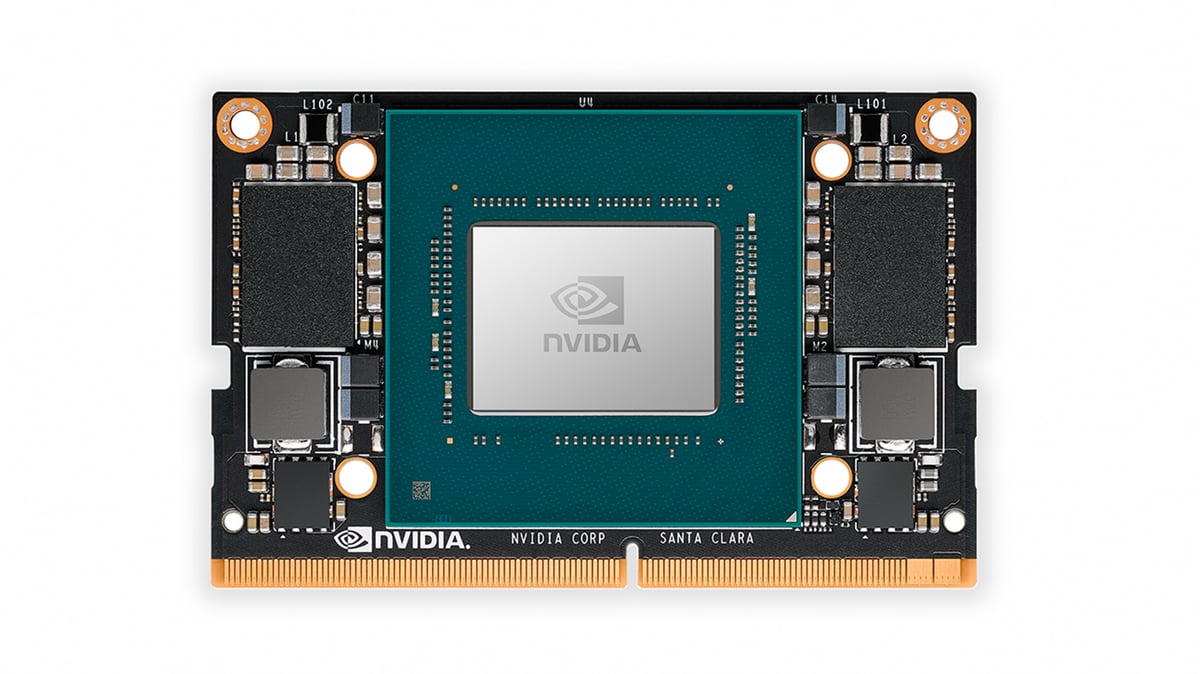
The hypothesis of a $10 trillion Nvidia hinges on the company successfully monetizing nascent technologies that are themselves poised to become trillion-dollar industries. This includes autonomous vehicles, where Nvidia's Drive platform is a key player, and the broader robotics market, where its Jetson platform provides the computational backbone. If these sectors scale as projected, and Nvidia maintains its leadership, the cumulative effect could indeed justify such an astronomical valuation.
Conclusion: A Vision of Unprecedented Scale
The prospect of Nvidia achieving a $10 trillion market capitalization by 2030, as contemplated by The Motley Fool, represents an extraordinary vision of future technological and economic transformation. While the company's strategic positioning in AI, its robust software ecosystem, and its expansion into new frontiers like the Omniverse provide compelling arguments for continued growth, the path is fraught with competitive pressures, regulatory hurdles, and the inherent challenges of scaling to such unprecedented levels. It demands not just sustained innovation but also a favorable macroeconomic environment and the successful monetization of multiple emerging trillion-dollar markets. Investors considering the long-term trajectory of such a pivotal technology leader would do well to continuously monitor its competitive advantages and market expansion strategies. To gauge the impact of this issue on Nvidia's valuation, reference the technical indicators on the FireMarkets NVDA analytics tool, and grasp the full context through in-depth Market Insight.
FireMarkets Intelligent Outlook
Real-time technical analysis and AI sentiment for AMJB, GOOG, JPMpK, GOOGN, VYLD, JPM, TSM, JPMpM, GOOGL, JPMpC, GOOGM, NVDA, JPMpD, AMD, AVGO, JPMpL, JPMpJ.
View AI Analysis Summary
Firemarkets.net AI Analysis Result:
* Not financial advice. Data for informational purposes only.
Want deeper analysis on this asset?
Check out expert reports and on-chain data provided by FireMarkets specialists.
All content provided by FireMarkets (including news, analysis, and data) is for reference purposes only to assist in investment decisions and does not constitute a recommendation to buy or sell any specific asset.
Financial markets are highly volatile, and past performance is not indicative of future results. Please rely on your own judgment and consult with professionals before making any investment decisions. FireMarkets assumes no legal liability for investment outcomes.