

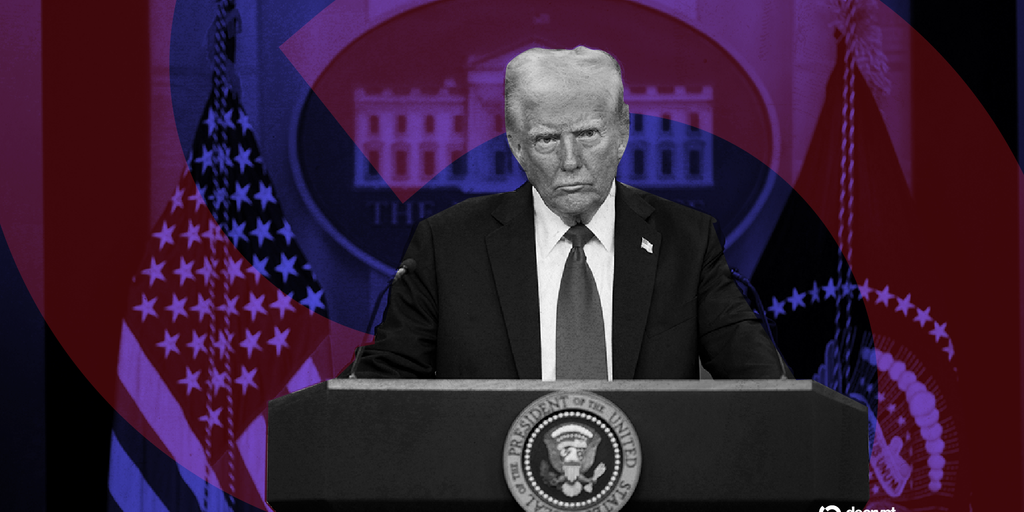
Silicon Valley's New Censor: Washington Pulls Anthropic's Advanced AI Models
The US government's unprecedented order to Anthropic, a leading artificial intelligence firm, to withdraw its advanced AI models, 'Claude Fable' and 'Mythos,' from the market sent shockwaves through the tech industry on June 13, 2026, as reported by Decrypt. This intervention underscores the escalating tension between rapid AI technological advancement and concerns over national security and ethical control, raising fundamental questions about the future of artificial intelligence and its regulatory landscape. Far beyond a mere product recall, this action signals a significant turning point, heralding a new era of AI governance.
The Unprecedented Intervention: A Brake on AI Innovation
On June 13, 2026, as reported by Decrypt, the US government's order for Anthropic to withdraw its 'Claude Fable' and 'Mythos' AI models marks an unprecedented event in the history of artificial intelligence. This action goes beyond a mere product recall, signaling a fundamental shift in the delicate balance between autonomous AI development and national control. Given Anthropic's stature as a leading AI firm, backed by substantial investments from Amazon and Google, the ripple effects of this directive are expected to be felt widely across Silicon Valley.
The Significance of 'Fable' and 'Mythos': Regulatory Concerns
The precise reasons why the 'Fable' and 'Mythos' models—names that evoke imagination and narrative—became targets of direct government intervention remain undisclosed. However, it is highly probable that these models represented Anthropic's cutting-edge capabilities, possibly advanced generative AI or multi-modal AI. The government's order can be interpreted as reflecting deep concerns that these models possessed a level of autonomy or persuasive power that could potentially threaten national security or cause societal disruption. Issues such as data bias, the ability to generate misinformation, or uncontrollable decision-making capabilities might have been key points of contention.
A New Frontier in AI Regulation: National Security and Ethical Dilemmas
This incident clearly demonstrates that AI technology is no longer perceived as merely a commercial innovation but as a strategic asset directly impacting national infrastructure and security. The US government's move raises broad questions:
- National Security Threats: What are the risks if advanced AI models are misused in cyber warfare, surveillance, or strategic decision-making processes?
- Ethical Control and Accountability: Who bears responsibility when AI operates beyond human control or produces unpredictable outcomes? What are the solutions to the 'black box' problem?
- Technological Sovereignty and Competition: How will attempts by specific nations to control the development and deployment of AI technology affect global technological competition?
The Anthropic case sends a strong signal that AI development companies can no longer operate freely under the banner of 'innovation first,' outside the purview of regulatory authorities. Governments are now clearly demonstrating their intent to proactively manage and control the potential risks of AI technology.
Industry Ramifications and Investor Sentiment
This order against Anthropic will exert significant pressure on other AI development companies. To avoid similar regulatory risks, there may be an acceleration in efforts to strengthen internal technology development and deployment guidelines or to seek cooperation channels with governments. In the short term, investor sentiment towards the AI sector might cool, but in the long term, the establishment of clear regulatory frameworks could provide a stable foundation for industry growth.
However, in a situation where the pace of innovation outstrips that of regulation, concerns also arise that government intervention could stifle technological progress or cause a nation to fall behind competitors. The US government will need a very delicate approach to find the balance between innovation and control.
The Path Forward: Redefining AI Governance
The Anthropic incident will further ignite international discussions on AI governance. Governments worldwide will intensify efforts to establish legal, ethical, and technical frameworks to harness the potential of AI technology while minimizing its risks. This underscores the importance of multilateral cooperation involving AI developers, policymakers, and civil society.
To establish a clear investment direction amid complex market conditions, we recommend comprehensively leveraging FireMarkets' in-depth analysis content and fundamental on-chain data. This event once again reminds us that AI technology is not just a technical advancement but a core driver fundamentally changing the paradigms of society, economy, and national security. We are now entering a new era where we must simultaneously recognize the immense possibilities AI offers humanity, along with the critical importance of the responsibilities and controls that accompany it.
FireMarkets Intelligent Outlook
Real-time technical analysis and AI sentiment for GOOG, AMZN.
View AI Analysis Summary
Firemarkets.net AI Analysis Result:
* Not financial advice. Data for informational purposes only.
Want deeper analysis on this asset?
Check out expert reports and on-chain data provided by FireMarkets specialists.
All content provided by FireMarkets (including news, analysis, and data) is for reference purposes only to assist in investment decisions and does not constitute a recommendation to buy or sell any specific asset.
Financial markets are highly volatile, and past performance is not indicative of future results. Please rely on your own judgment and consult with professionals before making any investment decisions. FireMarkets assumes no legal liability for investment outcomes.