

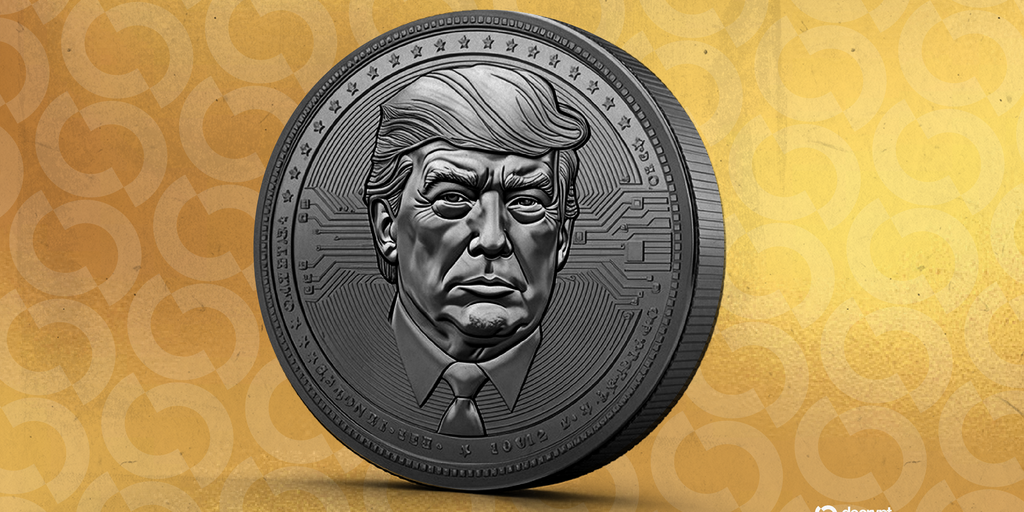
The Chartered Stablecoin: A Political Nexus in Digital Finance
The recent conditional bank charter granted to World Liberty, an entity reportedly linked to former President Donald Trump, for its USD1 stablecoin marks a pivotal moment in the convergence of traditional finance, political influence, and the burgeoning digital asset landscape. As reported by Decrypt, this development not only legitimizes a politically connected stablecoin but also sets a precedent for the regulatory oversight of digital currencies, challenging existing market dynamics and signaling a new era for financial innovation under a watchful eye.
The Confluence of Power and Digital Currency
The announcement, chronicled by Decrypt on August 15, 2026, that World Liberty, an organization with reported ties to former President Donald Trump, has secured a conditional bank charter for its USD1 stablecoin, reverberates far beyond the immediate financial headlines. This is not merely another stablecoin entering a crowded market; it represents a profound intersection where political capital meets the frontier of digital finance, potentially reshaping the regulatory narrative and market perception of stable assets.
A New Paradigm for Stablecoin Regulation
The granting of a bank charter, even a conditional one, to a stablecoin issuer signifies a monumental shift in regulatory philosophy. Historically, stablecoins have operated in a patchwork of regulatory gray areas, often facing scrutiny over reserves, transparency, and systemic risk. This charter, however, places World Liberty's USD1 directly within the established framework of traditional banking oversight, implying a level of scrutiny and compliance previously unseen for many digital assets. It suggests a future where stablecoins, particularly those aiming for broad adoption, may increasingly be compelled to integrate with legacy financial structures, offering a potential blueprint for future regulatory frameworks globally. This move could be interpreted as a proactive step by regulators to bring the rapidly expanding stablecoin market under a more robust and familiar supervisory umbrella, addressing concerns about financial stability and consumer protection.
Political Undercurrents and Market Dynamics
The "Trump-linked" aspect of World Liberty introduces a complex layer of political intrigue and potential influence. Such an association could either galvanize support from a specific demographic, accelerating adoption, or invite heightened scrutiny and political opposition. The branding and perceived backing could lend a unique form of legitimacy or controversy, distinguishing USD1 from its predecessors. From a market perspective, USD1 enters a highly competitive arena dominated by giants like Tether's USDT and Circle's USDC. Its success will hinge not only on its regulatory robustness and technological infrastructure but also on its ability to carve out a niche, potentially leveraging its political connections to foster partnerships or gain user trust. The political dimension could prove to be both its greatest asset and its most significant liability, influencing its trajectory in a market increasingly sensitive to external narratives.
The Future of Digital Fiat: Private vs. Public
This development also intensifies the ongoing global debate surrounding the future of digital fiat – specifically, the interplay between privately issued stablecoins and potential Central Bank Digital Currencies (CBDCs). By granting a bank charter to a private entity for a stablecoin, regulators are implicitly acknowledging the role and potential permanence of private digital currencies within the broader financial ecosystem. This could be seen as a pragmatic approach, allowing innovation to flourish under existing regulatory guardrails, rather than waiting for the potentially protracted development and implementation of a national CBDC. It raises fundamental questions about monetary sovereignty, financial innovation, and the optimal balance between centralized and decentralized control over digital money flows. World Liberty's USD1, under its new charter, could become a critical case study in this evolving landscape.
Navigating the Evolving Digital Frontier
The conditional bank charter for World Liberty's USD1 stablecoin is more than a mere business transaction; it is a significant marker in the maturation of the digital asset space. It underscores the increasing convergence of traditional finance, political influence, and technological innovation, presenting both immense opportunities and complex challenges. As these boundaries continue to blur, understanding the intricate interplay of regulatory shifts, market forces, and geopolitical currents becomes paramount for investors and policymakers alike. To establish a clear investment direction amid complex market conditions, we recommend comprehensively leveraging FireMarkets' in-depth analysis content and fundamental on-chain data.
FireMarkets Intelligent Outlook
Real-time technical analysis and AI sentiment for USDT, USD1, USDC.
View AI Analysis Summary
Firemarkets.net AI Analysis Result:
* Not financial advice. Data for informational purposes only.
Want deeper analysis on this asset?
Check out expert reports and on-chain data provided by FireMarkets specialists.
All content provided by FireMarkets (including news, analysis, and data) is for reference purposes only to assist in investment decisions and does not constitute a recommendation to buy or sell any specific asset.
Financial markets are highly volatile, and past performance is not indicative of future results. Please rely on your own judgment and consult with professionals before making any investment decisions. FireMarkets assumes no legal liability for investment outcomes.