

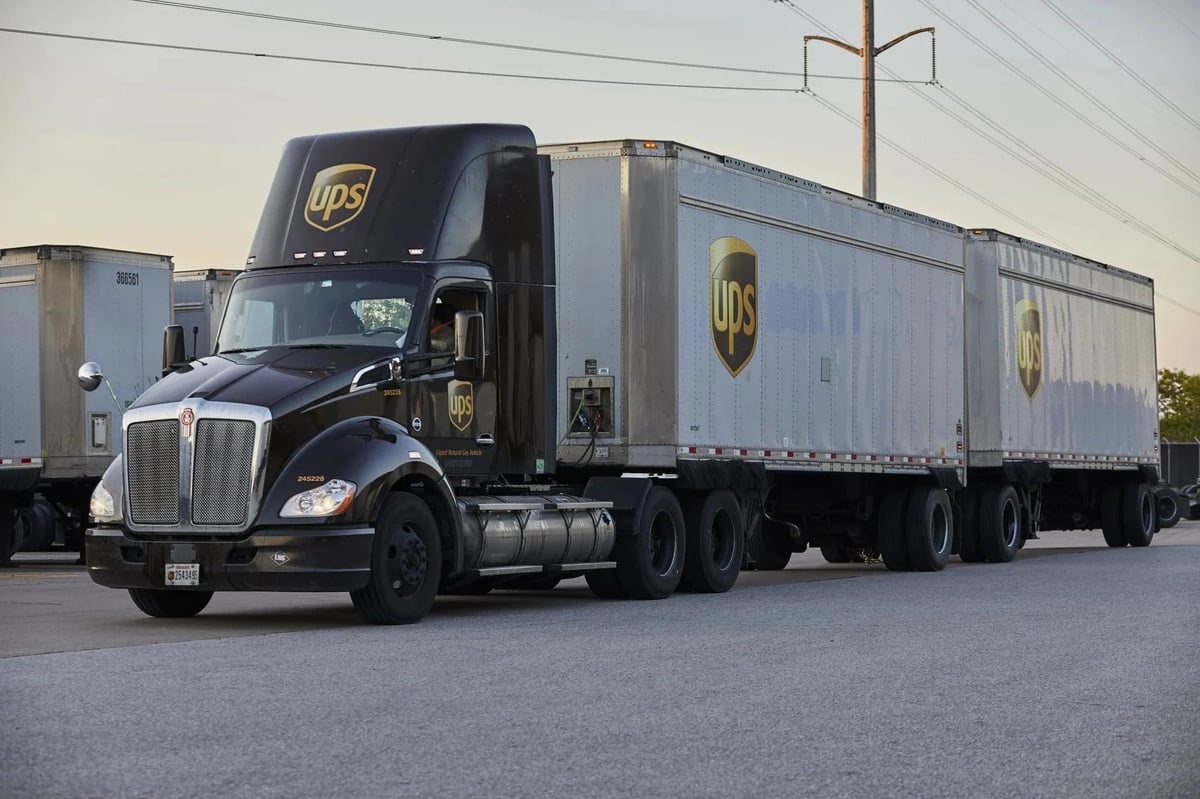
The Great Decoupling: UPS's Strategic Pivot Away from Amazon's Orbit
As reported by The Motley Fool on August 21, 2026, global logistics giant UPS is reportedly recalibrating its relationship with one of its largest customers, Amazon, signaling a bold strategic pivot. This move is not merely a business adjustment but a profound attempt by UPS to carve out its own growth trajectory, stepping out from Amazon's formidable shadow. This decision is poised to reshape the broader logistics landscape, carrying significant financial and operational implications for both companies. The central question remains: Is UPS's 'de-Amazonization' strategy a shrewd maneuver, or a high-stakes gamble fraught with unforeseen risks?
The Strategic Imperative: Why UPS is Shifting Gears
Reducing Concentration Risk and Improving Margins
UPS's move to redefine its relationship with Amazon is not merely a business adjustment but is rooted in long-term strategic imperatives. While Amazon has been one of UPS's largest customers, it has also leveraged its immense volume to exert significant pricing pressure. According to analysis from The Motley Fool, this dependency has squeezed UPS's margins and heightened concentration risk with a single client. By reducing its reliance on Amazon, UPS aims to reallocate resources towards higher-margin segments such as small and medium-sized businesses (SMBs), healthcare, and international shipping, thereby improving overall profitability.
Reclaiming Autonomy and Strengthening Brand Identity
The strategic recalibration can also be viewed as UPS's attempt to reclaim its own brand identity and operational autonomy. Given Amazon's sheer volume, a significant portion of UPS's network operations has historically been tailored to Amazon's demands. By breaking free from this dependency, UPS seeks to optimize its network according to its own strategic priorities, enhance customer experience, and build a stronger foundation for long-term competitiveness.
Amazon's Logistics Ascendancy: A Counterpoint
The Expansion of Amazon Logistics (AMZL)
UPS's strategic shift is not isolated from Amazon's aggressive expansion of its proprietary logistics network, Amazon Logistics (AMZL), over several years. Amazon has invested heavily to reduce delivery costs, accelerate delivery speeds, and gain greater control over its entire supply chain. UPS's decision to scale back Amazon volume could further accelerate Amazon's drive to bolster its in-house logistics capabilities. Amazon already handles a substantial portion of its own deliveries within the U.S., and UPS's move is likely to intensify this trend.
Amazon's Vision for Strategic Self-Sufficiency
Amazon's long-term vision encompasses self-sufficiency in all core operations, including logistics. This goes beyond mere cost efficiency, aiming for complete control over the customer experience and the independent development of innovative delivery solutions. The evolving relationship with UPS could serve as another catalyst for Amazon to move closer to achieving these ambitious goals.
Market Dynamics and Competitive Landscape
Implications for FedEx and Other Carriers
UPS's 'de-Amazonization' strategy will undoubtedly have ripple effects on competitors, including FedEx (FDX), and other carriers. While some of the relinquished Amazon volume might theoretically be dispersed to other carriers, the rapid expansion of Amazon's own logistics capabilities suggests this effect may be limited. Instead, Amazon's internal growth is likely to intensify overall competition within the logistics market. UPS, in turn, faces the challenge of successfully replacing Amazon's volume with other high-margin customers.
The Future of E-commerce Logistics
This strategic pivot offers crucial insights into the future trajectory of e-commerce logistics. We are likely to see a clearer trend where large e-commerce players build out their own logistics networks, while traditional carriers strive to diversify their customer base and reduce dependency on any single client. This dynamic is expected to spur further innovation and efficiency competition across the entire logistics industry.
Conclusion: A Calculated Risk or a Misstep?
UPS's strategic decoupling from Amazon is a bold move that could, in the short term, lead to revenue declines and operational challenges. However, from a long-term perspective, it presents an opportunity for UPS to improve profitability, diversify its customer base, and chart its own strategic course. Successful execution will hinge on how effectively UPS's management can attract new clients, optimize its network, and manage its cost structure. This will be a significant test that could shape the future of the logistics industry.
For more data-driven stock investment decisions, leverage FireMarkets' FDX detailed analysis. Don't miss the market expert insights alongside the volume charts.
FireMarkets Intelligent Outlook
Real-time technical analysis and AI sentiment for FDX, AMZN, UPS.
View AI Analysis Summary
Firemarkets.net AI Analysis Result:
* Not financial advice. Data for informational purposes only.
Want deeper analysis on this asset?
Check out expert reports and on-chain data provided by FireMarkets specialists.
All content provided by FireMarkets (including news, analysis, and data) is for reference purposes only to assist in investment decisions and does not constitute a recommendation to buy or sell any specific asset.
Financial markets are highly volatile, and past performance is not indicative of future results. Please rely on your own judgment and consult with professionals before making any investment decisions. FireMarkets assumes no legal liability for investment outcomes.