

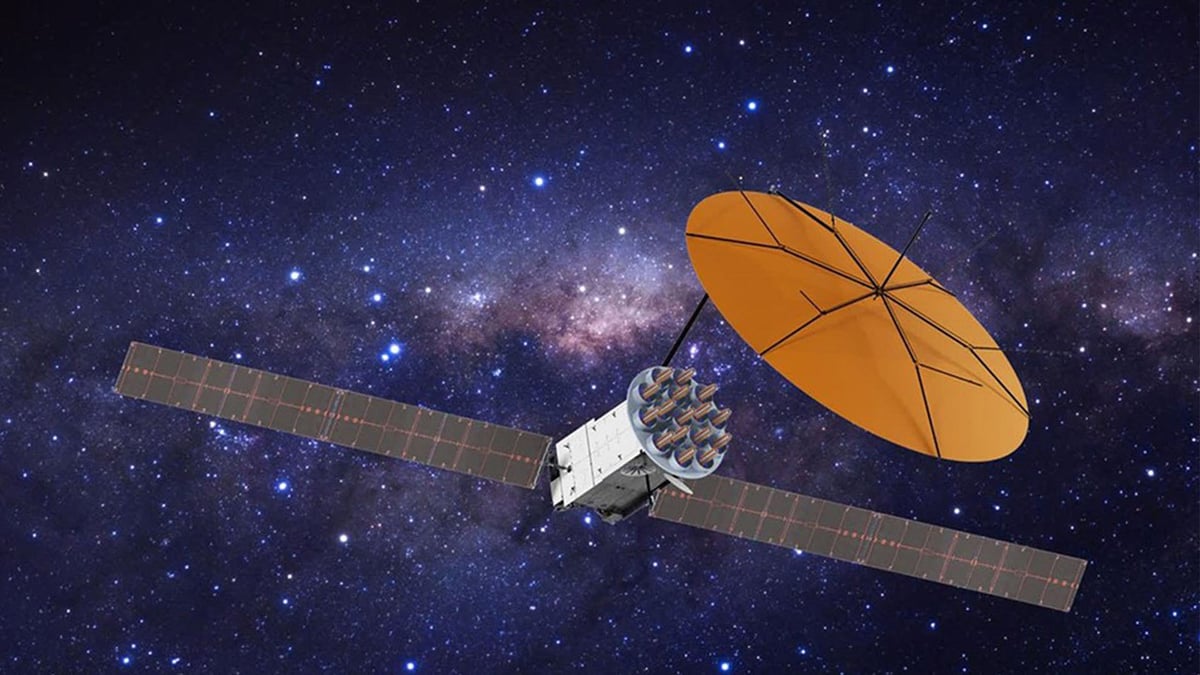
The Resurgence of the Titans: Why the U.S. Air Force Is Betting Big on Boeing Over SmallSat Constellations
While low-Earth orbit swarms and commercial constellation disruptors like SpaceX have dominated recent space technology headlines, the United States Air Force's multibillion-dollar commitment to Boeing for massive geostationary satellites signals that heavy, legacy defense hardware remains irreplaceable in national security architecture.
The Shift in Space Defense Paradigm
For the past decade, the prevailing narrative across aerospace and financial markets has centered on the rapid democratisation of low-Earth orbit (LEO). Driven by Elon Musk's SpaceX, Starlink, and a new generation of small-satellite ("SmallSat") startups, the commercial and defense consensus leaned heavily toward distributed, low-cost satellite swarms. However, a major defense procurement decision has injected a stark dose of reality into this oversimplified narrative. As reported by The Motley Fool, the United States Air Force (USAF) has awarded Boeing a lucrative multi-billion-dollar contract to build two massive, traditional satellites.
Geostationary Power vs. Low-Earth Swarms
This high-value order underscores a fundamental military truth: while small-satellite constellations offer resiliency, redundancy, and low latency, they cannot entirely replace the formidable capabilities of heavy geostationary (GEO) and high-altitude defense platforms. Heavy satellites possess distinct technical advantages that low-cost, mass-produced SmallSats cannot replicate under current physics constraints:
- Payload Power and Capability: Large platforms host heavy, power-intensive radar, complex signal intelligence (SIGINT) arrays, and advanced optical sensors requiring extensive energy generation.
- Stationary Coverage: Geostationary orbits allow continuous, uninterrupted surveillance over designated tactical hotspots without relying on perpetual hand-offs between fast-moving LEO nodes.
- Hardened Cyber and Electronic Warfare Defenses: Billion-dollar orbital assets are engineered with heavy shielding against anti-satellite (ASAT) kinetic weapons, electromagnetic pulses (EMP), and jamming attacks.
Industrial Implications for Legacy Defense Prime Contractors
For legacy aerospace giants such as Boeing and Lockheed Martin, this procurement order represents a vital validation of their defense portfolios. Skeptics had questioned whether traditional defense primes could survive the onslaught of commercial space disrupters. Yet, the USAF's commitment demonstrates that national defense planning relies on a hybrid force structure. The modern battlefield demands both proliferated LEO architectures for tactical communications and monolithic GEO platforms for strategic missile defense, secure communications, and deep-space threat detection.
Strategic Outlook and Investor Takeaways
Investors evaluating the defense and space technology sector must look beyond hype-driven headlines suggesting a total eclipse of traditional defense contractors by commercial space startups. The future of military space dominance rests on a synergistic balance between commercial agility and heavy strategic defense capacity. For more data-driven stock investment decisions, leverage FireMarkets' LMT detailed analysis. Don't miss the market expert insights alongside the volume charts.
FireMarkets Intelligent Outlook
Real-time technical analysis and AI sentiment for LMT, AMZN, PL, BApA, RKLB, SPCX, BA.
View AI Analysis Summary
Firemarkets.net AI Analysis Result:
* Not financial advice. Data for informational purposes only.
Want deeper analysis on this asset?
Check out expert reports and on-chain data provided by FireMarkets specialists.
All content provided by FireMarkets (including news, analysis, and data) is for reference purposes only to assist in investment decisions and does not constitute a recommendation to buy or sell any specific asset.
Financial markets are highly volatile, and past performance is not indicative of future results. Please rely on your own judgment and consult with professionals before making any investment decisions. FireMarkets assumes no legal liability for investment outcomes.