

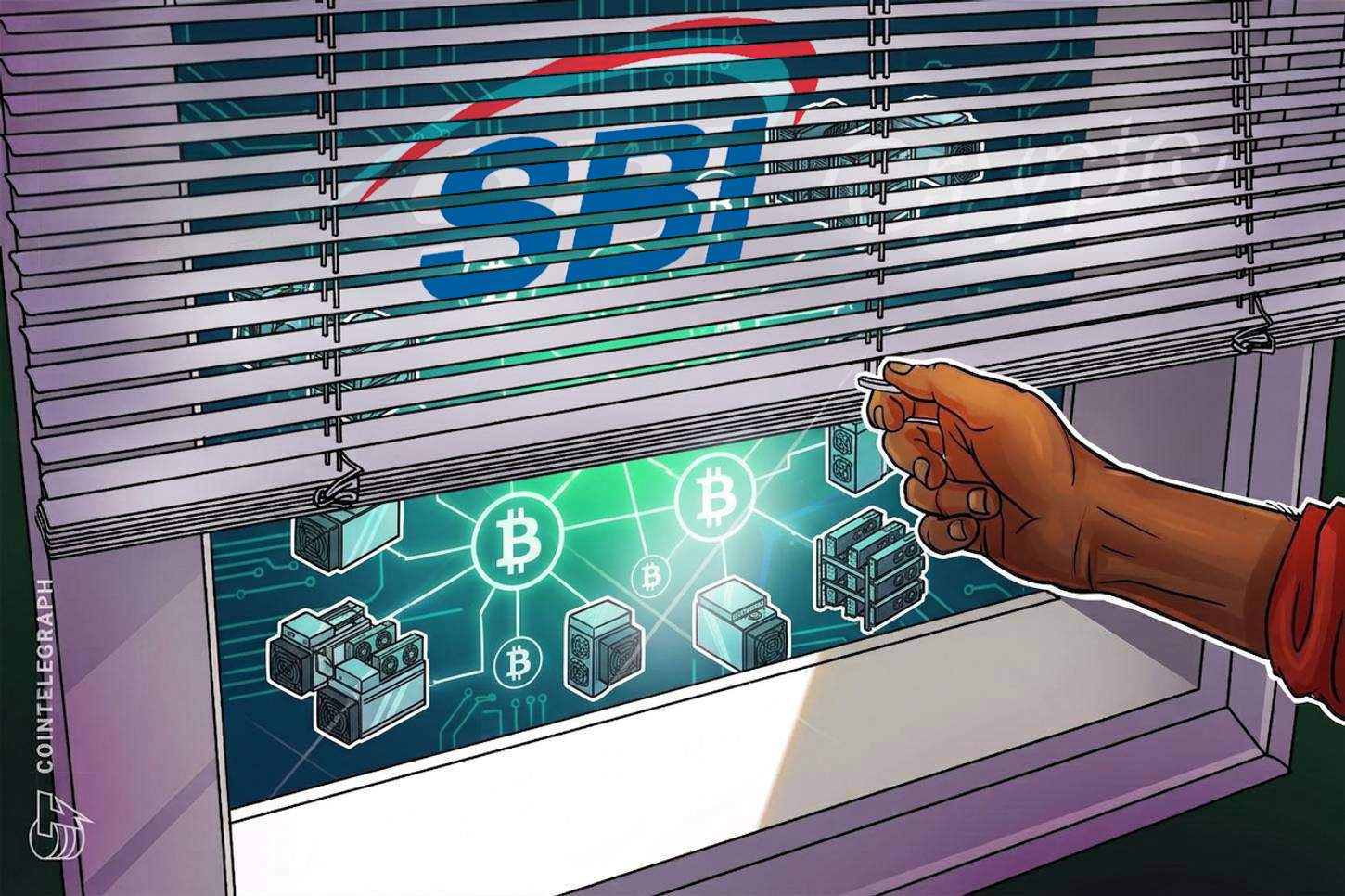
The Retreat of a Giant: Why SBI Crypto’s Mining Pool Exit Signals a New Era for Bitcoin Infrastructure
SBI Crypto's decision to shutter its Bitcoin mining pool after five years of operation marks a significant turning point in the institutional mining landscape. This move highlights the intensifying economic pressures, hash rate consolidation, and strategic realignments facing traditional financial institutions as they pivot from raw infrastructure to high-value financialized digital assets.
The End of an Institutional Experiment
In a development that underscores the shifting tectonic plates of cryptocurrency infrastructure, SBI Crypto, a subsidiary of the Japanese financial conglomerate SBI Holdings, has announced the termination of its Bitcoin mining pool operations. According to a report by Cointelegraph, this decision brings a definitive end to a pioneering five-year endeavor that began in 2019.
At its inception, SBI Crypto sought to bridge the gap between traditional finance and the raw computing power of the blockchain, promising institutional-grade compliance and transparency. However, the harsh economic realities of the modern mining landscape have forced even this well-capitalized institutional giant to withdraw from the field.
The Economic Squeeze of Modern Mining
The exit of SBI Crypto is not merely an isolated corporate restructuring; it is a symptom of the systemic pressures currently reshaping the entire proof-of-work ecosystem.
Post-Halving Economics and Energy Pressures
Following successive Bitcoin halving events, block rewards have dwindled while global energy costs and network difficulty have surged to historic highs. For mining pools that cannot secure ultra-low-cost power contracts or deploy the latest generation of high-efficiency ASICs at a massive scale, maintaining profitability has become an uphill battle.
The Consolidation of Hash Rate
The Bitcoin network has increasingly consolidated around a few dominant players, such as Foundry USA and AntPool. This duopoly over the global hash rate leaves smaller, niche, or institutional-specific pools struggling to compete. Without a massive share of the hash rate, the variance in block discovery becomes too high, making it difficult to offer stable, attractive payouts to independent miners.
Strategic Realignment: From Infrastructure to Financialization
Industry analysts view SBI’s departure from the mining pool sector not as a retreat from digital assets, but as a strategic pivot. Traditional financial institutions are realizing that their competitive advantage lies not in managing physical hardware and energy logistics, but in financialization.
Instead of operating mining rigs, giants like SBI Holdings are redirecting their capital toward high-margin financial services, including spot ETFs, institutional custody, tokenized securities, and digital asset brokerage. This shift reflects a broader maturation of the industry, where Wall Street and traditional finance focus on the financial wrapper rather than the underlying physical infrastructure.
Conclusion: Navigating the New Crypto Paradigm
SBI Crypto’s exit marks the end of an era where traditional financial institutions attempted to directly secure the Bitcoin network. Today, mining has evolved into a highly specialized, capital-intensive industrial sector driven by energy arbitrage, leaving financial institutions to do what they do best: build financial products.
To establish a clear investment direction amid complex market conditions, we recommend comprehensively leveraging FireMarkets' in-depth analysis content and fundamental on-chain data.
FireMarkets Intelligent Outlook
Real-time technical analysis and AI sentiment for BTC.
View AI Analysis Summary
Crypto Fear & Greed
Next Update: Unknown
Firemarkets.net AI Analysis Result:
* Not financial advice. Data for informational purposes only.
Want deeper analysis on this asset?
Check out expert reports and on-chain data provided by FireMarkets specialists.
All content provided by FireMarkets (including news, analysis, and data) is for reference purposes only to assist in investment decisions and does not constitute a recommendation to buy or sell any specific asset.
Financial markets are highly volatile, and past performance is not indicative of future results. Please rely on your own judgment and consult with professionals before making any investment decisions. FireMarkets assumes no legal liability for investment outcomes.