

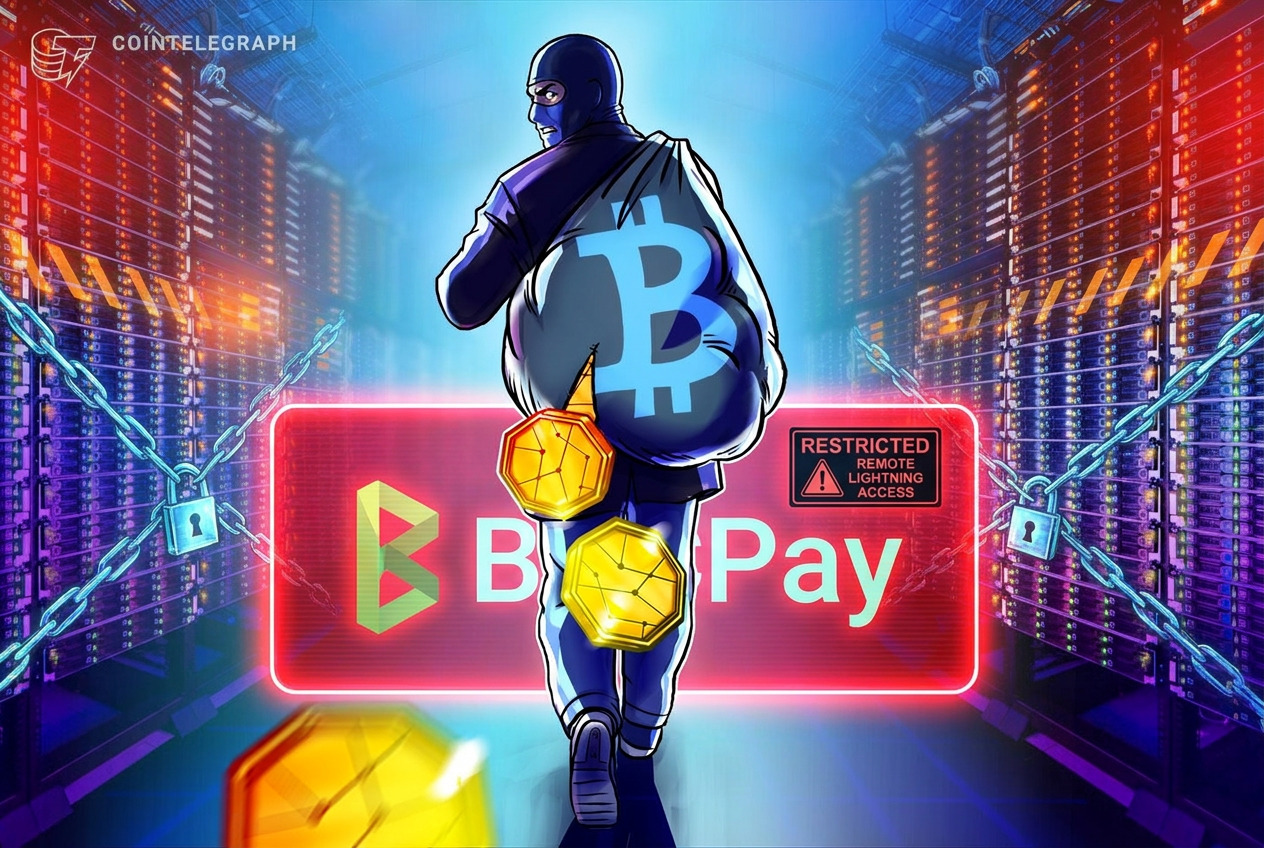
The Security Imperative: BTCPay Server Restricts Remote Lightning Access Following Exploit
In a sobering reminder of the trade-offs between remote usability and cryptographic security, open-source Bitcoin payment processor BTCPay Server has restricted remote Lightning Network access following an exploit that resulted in stolen funds. As reported by Cointelegraph, the incident highlights critical operational vulnerabilities in layer-2 payment architectures and forces a industry-wide re-evaluation of node security protocols.
An Anatomy of the Compromise: How Remote Access Vulnerabilities Surfaced
BTCPay Server, an industry-standard open-source Bitcoin payment processor, has taken decisive action by restricting remote Lightning Network access following a malicious attack that resulted in stolen funds. According to a report by Cointelegraph, attackers exploited vulnerabilities associated with remote management features to unauthorizedly drain funds from compromised Lightning nodes.
The Lightning Network—designed as Bitcoin’s primary layer-2 scaling solution to facilitate microtransactions with near-instant settlement and negligible fees—relies heavily on seamless node management. However, this exploit serves as a stark reminder that enabling remote accessibility can introduce serious attack surfaces if cryptographic safeguards and access controls are breached.
Operational Ramifications for Decentralized Merchant Ecosystems
The Friction Between Convenience and Sovereignty
BTCPay Server has long been celebrated by self-sovereignty advocates because it allows merchants to process Bitcoin transactions directly without third-party intermediaries. To simplify node maintenance, remote access features allowed administrators to manage their channels and funds off-site. Yet, this convenience proved to be the Achilles' heel in the system's security architecture.
- Emergency Access Restrictions: BTCPay Server moved quickly to disable or heavily restrict remote Lightning node bindings to prevent further capital loss across user nodes.
- Administrative Overhead for Merchants: Node operators are now required to update their software configurations, audit their server environments, and shift toward stricter local management practices.
Re-evaluating Layer-2 Security Architecture
Because Lightning Network nodes operate as hot wallets—holding live private keys online to route payments—they are inherently exposed to greater risk than cold storage solutions. The breach highlights that scaling Bitcoin involves not just cryptographic protocol design, but robust end-to-end security in peripheral software and administrative interfaces.
Strategic Outlook: Fortifying Bitcoin's Layer-2 Future
While the exploit presents immediate friction for merchant adoption, the proactive response from the BTCPay Server development team underscores the resilience of open-source security culture. In response to the incident, the ecosystem is expected to accelerate the adoption of hardware security modules (HSMs), multi-signature key delegation, and hardened zero-trust access frameworks for remote node management.
As digital asset payment systems mature, balancing seamless user experience with ironclad cryptographic security remains the central challenge. To establish a clear investment direction amid complex market conditions, we recommend comprehensively leveraging FireMarkets' in-depth analysis content and fundamental on-chain data.
FireMarkets Intelligent Outlook
Real-time technical analysis and AI sentiment for BTC.
View AI Analysis Summary
Crypto Fear & Greed
Next Update: Unknown
Firemarkets.net AI Analysis Result:
* Not financial advice. Data for informational purposes only.
Want deeper analysis on this asset?
Check out expert reports and on-chain data provided by FireMarkets specialists.
All content provided by FireMarkets (including news, analysis, and data) is for reference purposes only to assist in investment decisions and does not constitute a recommendation to buy or sell any specific asset.
Financial markets are highly volatile, and past performance is not indicative of future results. Please rely on your own judgment and consult with professionals before making any investment decisions. FireMarkets assumes no legal liability for investment outcomes.