

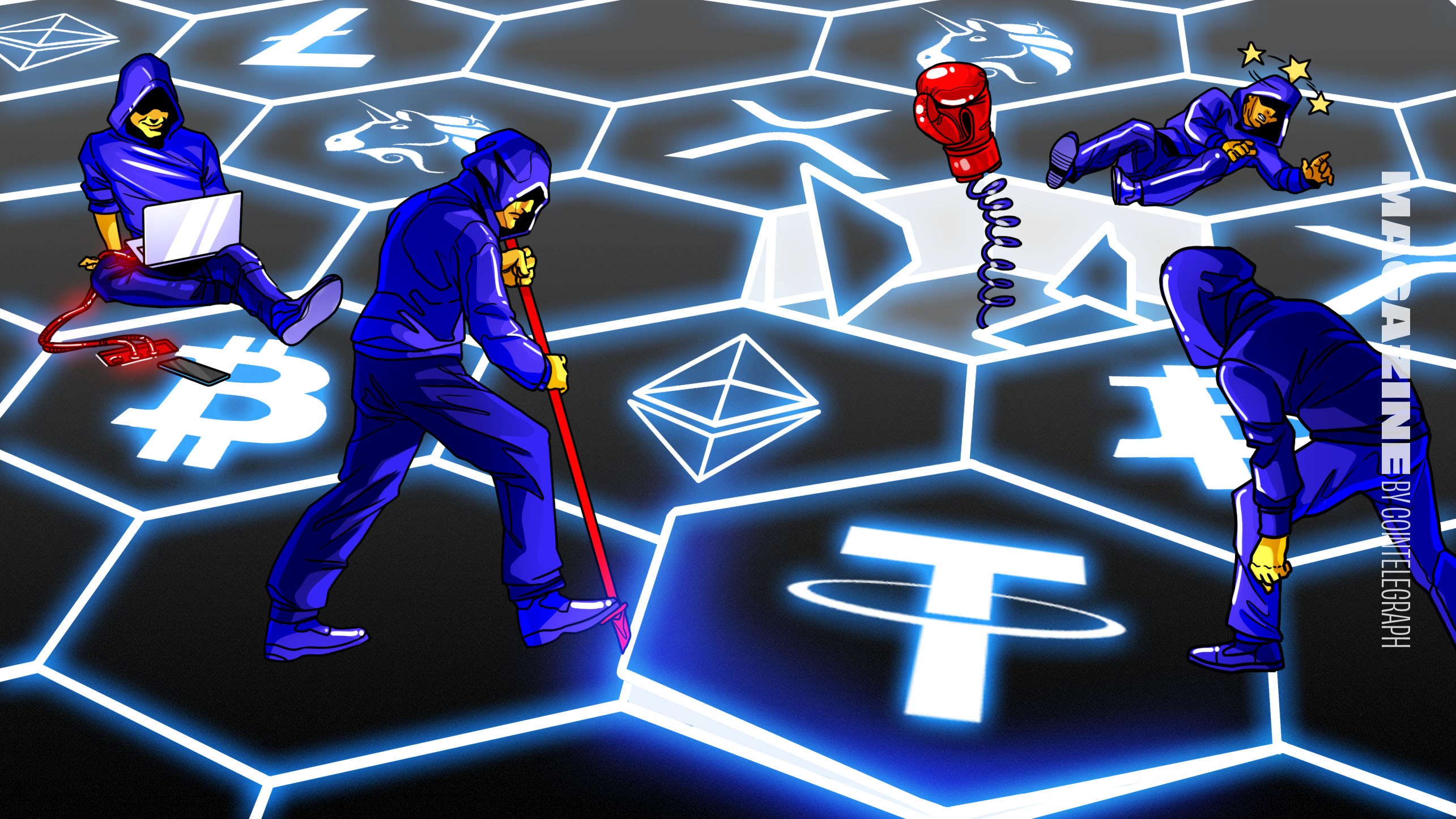
The Shadowy Mechanics of DeFi: A $2 Million Lesson in the Dark Forest
In a stark reminder of the inherent perils lurking within the decentralized finance ecosystem, a recent incident saw a trader lose a staggering $2 million to a sophisticated 'same-block backrun extraction' exploit. This event, reported by Cointelegraph, underscores the relentless innovation of malicious actors and the critical need for vigilance in a landscape where the very transparency of the blockchain can be weaponized against its participants.
The $2 Million Backrun: A Glimpse into the Abyss
Unpacking the Exploit
As reported by Cointelegraph on July 7, 2026, a cryptocurrency trader suffered a staggering $2 million loss due to a highly sophisticated 'same-block backrun extraction' exploit. This incident transcends a simple hack, embodying a cunning attack that leverages subtle vulnerabilities in blockchain transaction processing. A 'backrun' refers to the act of detecting a specific transaction's inclusion in a block and then immediately submitting one's own transaction to follow it within the same block, exploiting the effects of the initial transaction.
The 'Same-Block' Advantage
The 'same-block' condition, in particular, suggests that the attacker capitalized on an extremely narrow time window to predict the outcome of the victim's transaction before its finalization and maximize their own profit. This is typically achieved by real-time monitoring of transactions awaiting confirmation in the blockchain's mempool, and then, when specific conditions are met, automatically paying a high gas fee to prioritize their own transaction's inclusion in the block. Consequently, the victim experiences an outcome contrary to their intention, resulting in a substantial loss.
The Dark Forest of Decentralized Finance
Maximal Extractable Value (MEV) and its Cousins
Such backrun attacks are a form of the broader concept known as 'Maximal Extractable Value (MEV).' MEV refers to the profit that block producers can extract by arbitrarily reordering, including, or excluding transactions within a block. Beyond backruns, front-running and sandwich attacks are common types of MEV. All these methods exploit the transparency of the blockchain and the characteristics of transaction ordering mechanisms to gain an advantage. As the DeFi ecosystem matures, MEV continues to evolve within the ambiguous boundary between legitimate arbitrage opportunities and malicious attacks.
The Perpetual Arms Race
The 'dark forest' analogy for DeFi aptly describes this environment. Once a transaction enters the mempool, numerous 'hunters' monitor it, searching for prey. They use sophisticated bots to identify potential profits and compete to intercept them. This environment compels traders and protocol developers to constantly enhance their security and defense mechanisms, akin to a perpetual arms race. As attackers' techniques advance, defenders must also develop more sophisticated tools and strategies.
Implications for Trust and Adoption
Eroding Confidence
Large-scale attack incidents, such as this $2 million loss, can severely erode trust in the broader DeFi ecosystem. For retail investors, in particular, DeFi may continue to be perceived as an unpredictable and risky domain, serving as a major impediment to mainstream adoption. The paradox that the core blockchain values of transparency and immutability can be weaponized by attackers raises fundamental questions about DeFi's underlying design.
The Imperative for Advanced Analytics and Security
To counter these risks, a multi-layered security strategy extending beyond simple smart contract audits is essential. It is crucial to monitor MEV activities through on-chain data analysis, identify potential vulnerabilities proactively, and explore novel approaches to transaction ordering. Furthermore, users must act cautiously, armed with a deep understanding of how their transactions are processed and what risks they might be exposed to.
Conclusion: Vigilance in a Volatile World
This $2 million loss incident serves as a stark reminder of the complex and perilous realities hidden beneath the growth of the DeFi market. As technology advances, so do the methods of attack, implying that investors must adopt even more thorough analysis and vigilance. Explore the detailed analysis of macro indicators, gold, silver, cryptocurrencies, and more through Market Insight on FireMarkets, and leverage the on-chain fundamental analysis to forecast market trends and optimize your investment decisions. Making informed investment decisions in the ever-evolving digital asset market is more critical than ever.
Want deeper analysis on this asset?
Check out expert reports and on-chain data provided by FireMarkets specialists.
All content provided by FireMarkets (including news, analysis, and data) is for reference purposes only to assist in investment decisions and does not constitute a recommendation to buy or sell any specific asset.
Financial markets are highly volatile, and past performance is not indicative of future results. Please rely on your own judgment and consult with professionals before making any investment decisions. FireMarkets assumes no legal liability for investment outcomes.