

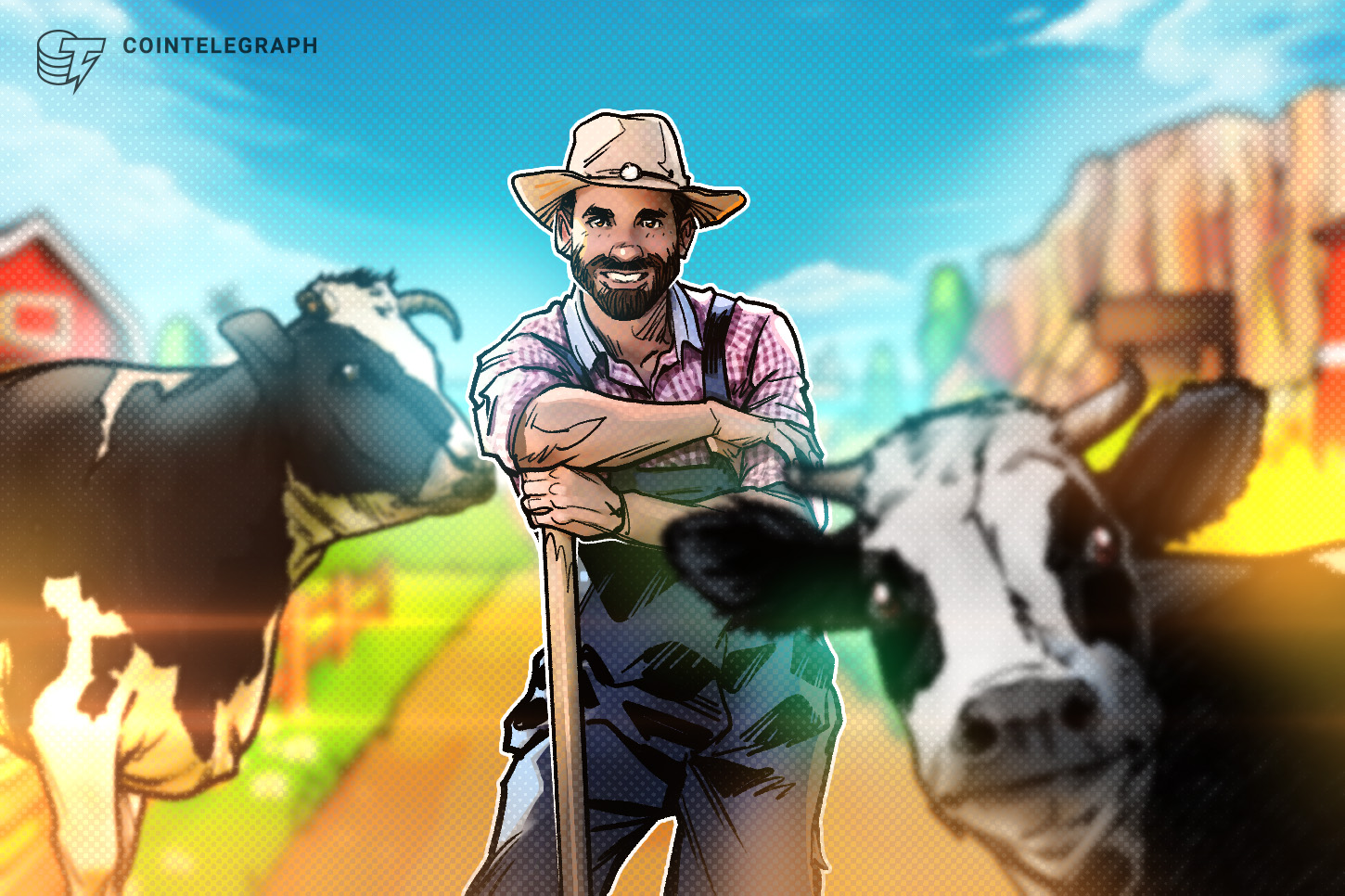
Tokenized Livestock: How Brazil’s Agribusiness is Expanding the Frontiers of Real-World Asset Tokenization
In a sophisticated convergence of traditional agrarian capital and decentralized financial infrastructure, Brazil’s agricultural sector has begun utilizing tokenized cattle as collateral for credit and institutional loans. This pioneering move in Real-World Asset (RWA) tokenization highlights how blockchain technology can unlock unprecedented liquidity for traditional commodity producers while establishing a novel paradigm for agricultural financing in emerging markets.
In the evolving landscape of global decentralized finance, Real-World Asset (RWA) tokenization is swiftly transcending theoretical concepts to tackle real-world credit inefficiencies. In a landmark development within South America's largest economy, Brazilian agricultural entities have officially deployed tokenized cattle as collateral for credit loans, establishing a precedent for biological asset financialization.
From Livestock to Liquidity: Expanding the RWA Horizon
Historically, the agribusiness sector has suffered from severe liquidity friction despite possessing high-value collateral assets. Livestock and agricultural commodities are notoriously difficult to leverage efficiently due to high verification costs, physical management risks, and fragmented valuation metrics. Traditional financial institutions often apply steep haircuts or charge exorbitant interest rates when underwriting such loans.
The tokenization of cattle addresses these structural bottlenecks directly. By converting verifiable agricultural assets into immutable digital tokens on the blockchain, primary producers can unlock untapped capital. Each tokenized asset serves as a digital twin containing granular data on breed, weight, health, and lineage, transforming previously illiquid physical stock into standardized, composable financial collateral.
Technological Integration and Risk Mitigation
IoT, Oracles, and Automated Collateral Monitoring
At the technological foundation of this novel loan system is the convergence of IoT biometric tracking and decentralized oracle networks. Biometric sensors affixed to the livestock transmit continuous data regarding health, location, and operational metrics directly to smart contracts. According to a report by Cointelegraph, this automated oversight mitigates moral hazard, prevents duplicate collateralization, and dynamically recalculates collateralization ratios in real time—drastically reducing risk premiums for lenders.
Empowering Agricultural Capital Efficiency
For agricultural producers in emerging markets like Brazil, capital cost reduction is crucial for scaling operations. By tokenizing assets and anchoring them on-chain, farmers gain access to institutional credit lines and broader liquidity protocols without relying solely on regional bank monopolies. This disintermediation reduces borrowing overhead, enhances balance sheet efficiency, and introduces unprecedented transparency into supply chain financing.
Broader Financial Implications
The successful deployment of biological assets within standard lending frameworks signals a new maturity phase for Web3 infrastructure. As tokenization moves beyond conventional real estate and government debt into complex commodity asset classes, the boundaries between traditional agrarian finance and digital asset capital markets will continue to blur seamlessly.
To analyze the ripple effects of global economic issues on asset markets from multiple angles, leverage FireMarkets' expert analysis columns and diverse asset charting tools.
Want deeper analysis on this asset?
Check out expert reports and on-chain data provided by FireMarkets specialists.
All content provided by FireMarkets (including news, analysis, and data) is for reference purposes only to assist in investment decisions and does not constitute a recommendation to buy or sell any specific asset.
Financial markets are highly volatile, and past performance is not indicative of future results. Please rely on your own judgment and consult with professionals before making any investment decisions. FireMarkets assumes no legal liability for investment outcomes.