

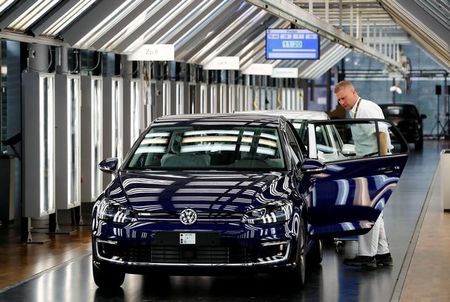
Volkswagen's Crossroads: Internal Friction Threatens a Pivotal Transformation
Volkswagen, a titan of the automotive world, finds its ambitious restructuring plans stalled by significant internal resistance and a recent board setback. This development, reported by Investing.com on July 11, 2026, casts a shadow over the company's critical pivot towards electric vehicles and software, raising profound questions about its leadership's ability to navigate the complex currents of corporate change and stakeholder demands. It symbolizes not just a challenge for one company, but the arduous process traditional manufacturers face in adapting to a rapidly evolving industrial landscape.
The Imperative of Reinvention: Volkswagen's Grand Strategy
For decades, Volkswagen has stood as a colossus in the global automotive landscape. Yet, the glory of the internal combustion era is rapidly fading, and the transition to an electric vehicle (EV) and software-defined mobility era has become an existential imperative. To compete with agile newcomers like Tesla and formidable Chinese EV manufacturers, Volkswagen has embarked on an ambitious restructuring plan, aiming for innovation in production methods, enhancement of software capabilities, and overall cost efficiency. This signifies more than a mere business model shift; it represents a fundamental reinvention that shakes the very foundations of corporate culture and organizational structure.
Boardroom Battlegrounds: Resistance to Change
However, as reported by Investing.com, this critical path to transformation is proving anything but smooth. News of 'resistance' and a 'board setback' within Volkswagen's board of directors suggests deep-seated internal conflicts. This can be interpreted as more than just a minor disagreement among executives; it likely stems from the complex dynamics of various stakeholders comprising the colossal Volkswagen organization.
Implications for Corporate Governance and Leadership Stability
Volkswagen's governance structure is notoriously complex, intertwined with powerful family shareholders like the Porsche-Piëch clan, influential labor unions (IG Metall), and regional political interests. Pushing radical change within such a structure inevitably disrupts existing power balances and vested interests. A setback in the boardroom could signify the rejection of a specific restructuring proposal, a delay in critical investment decisions, or even a vote of no confidence in the top management's leadership. This can erode the CEO's authority and strategic momentum, amplifying uncertainty about the company's future direction.
Market Perception and Competitive Landscape
Such internal friction can immediately impact market perception and investor sentiment. Uncertainty often leads to downward pressure on stock prices, and Volkswagen's competitors will undoubtedly seize upon these delays as opportunities. Tesla and BYD are already leading the charge in the EV market, while other traditional automakers are also rapidly attempting their own transitions. The longer Volkswagen's transformation is delayed, the greater the risk of losing market share and technological advantage. Furthermore, corporate stability and vision are crucial factors in attracting top talent in software and EV technology, areas where delays can be particularly detrimental.
A Broader Industry Reflection: The Agony of Transformation
Volkswagen's struggle is not unique; it reflects a universal 'agony of transformation' faced by giants in traditional industries amidst a rapidly evolving technological landscape. The tension between short-term profitability and long-term strategic investment, the adherence to established successful methods, and the resistance from powerful internal stakeholders are common challenges faced by many corporations. Volkswagen's case serves as a stark reminder that such transformations extend beyond mere technological innovation, encompassing holistic changes in organizational culture and governance.
Navigating the Future: A Test of Resolve
Moving forward, Volkswagen faces a significant test. The key challenge will be how it resolves the boardroom conflicts and regains the support of its diverse stakeholders. Whether through revised plans achieved by compromise or a decisive leadership reshuffle, resolute action will be necessary. FireMarkets provides real-time data across diverse asset classes and professional-grade market analysis content, supporting informed investment decisions. Volkswagen's situation clearly demonstrates that a company's future hinges not only on its technological prowess but also on its internal cohesion and willingness to embrace change.
FireMarkets Intelligent Outlook
Real-time technical analysis and AI sentiment for VOW.
View AI Analysis Summary
Firemarkets.net AI Analysis Result:
* Not financial advice. Data for informational purposes only.
Want deeper analysis on this asset?
Check out expert reports and on-chain data provided by FireMarkets specialists.
All content provided by FireMarkets (including news, analysis, and data) is for reference purposes only to assist in investment decisions and does not constitute a recommendation to buy or sell any specific asset.
Financial markets are highly volatile, and past performance is not indicative of future results. Please rely on your own judgment and consult with professionals before making any investment decisions. FireMarkets assumes no legal liability for investment outcomes.